The Kaimana
Record
Fourteen years, three blocs, one object on its way out of the solar system. This is the account the Accords allow civilians to read. Some lines are still blacked out. Click them. The release order says you're allowed.
Everything on this page is fiction. The physics it leans on is in the five briefings.
- 4 October 2026New York City
The prediction
 Archive still · 2026 · reconstruction§1 is that model →
A civilian software engineer publishes an interactive nuclear stability model on a personal website. It reproduces the measured chart of nuclides to within a couple of orders of magnitude and includes one deliberately unreasonable input: a proton shell gap at Z = 126 far stronger than any theorist would accept. With the slider pushed all the way up, element 126 stops decaying.
The page is seen by a few hundred people, most of them bots. One of them was a graduate student in Tsukuba who printed it out and pinned it above her desk, where it stayed for twenty-three years.
- 14 March 2049Haleakalā, Maui
The signal
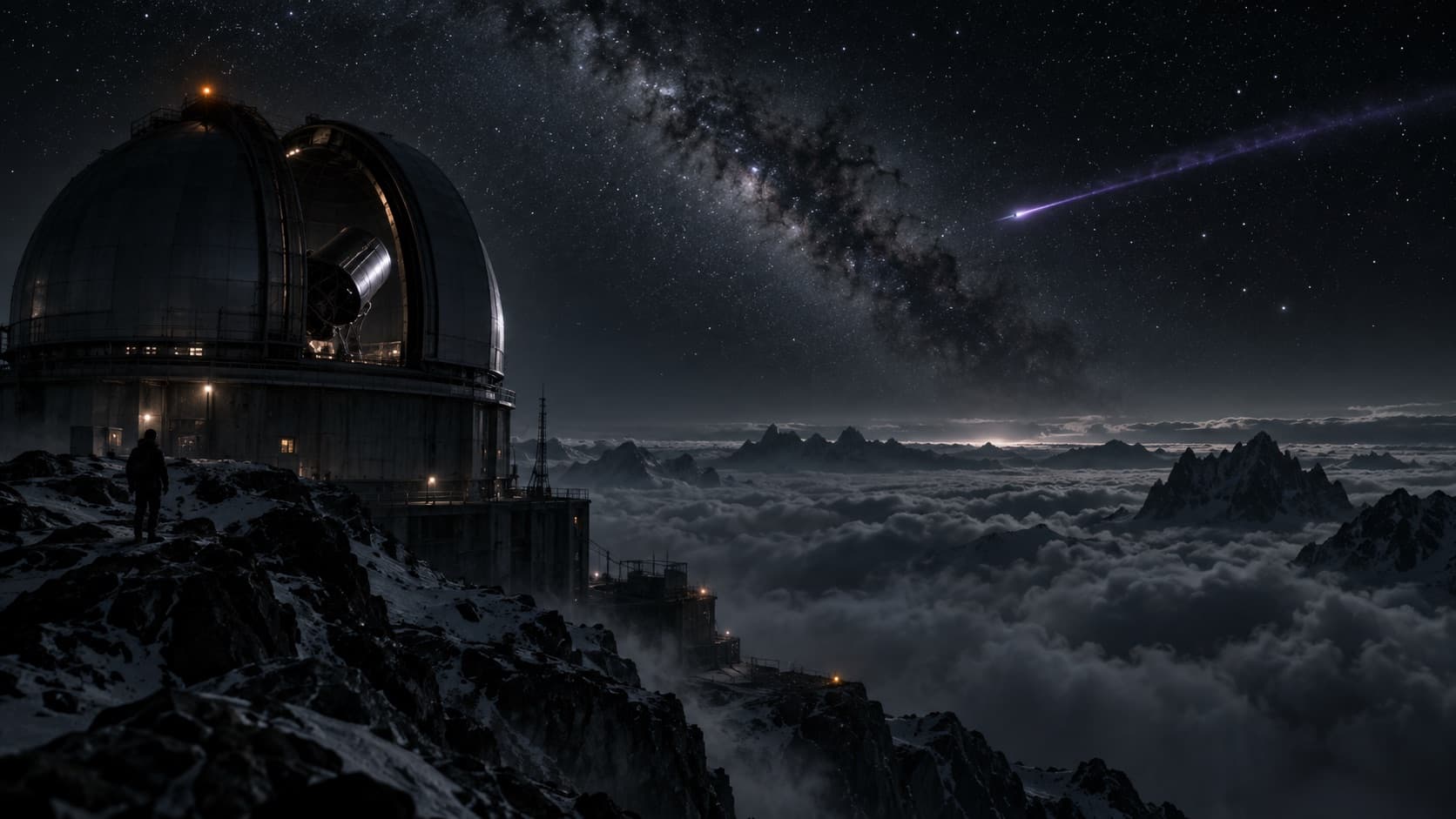 Archive still · 2049 · reconstruction
A survey telescope flags an inbound interstellar object on a steep hyperbolic orbit, the thirty-seventh ever catalogued. Staff astronomer Leilani Kahale names it Kaimana, “power of the sea.” Its reflected light carries an absorption line at 401.6 nanometers that matches no known element.
The line is published, argued about, and filed under instrument error by everyone except the observatory's night custodian, who had seen the same number on a printout in a Japanese lab's outreach video.
- 2049 to 2051Three capitals
The arithmetic
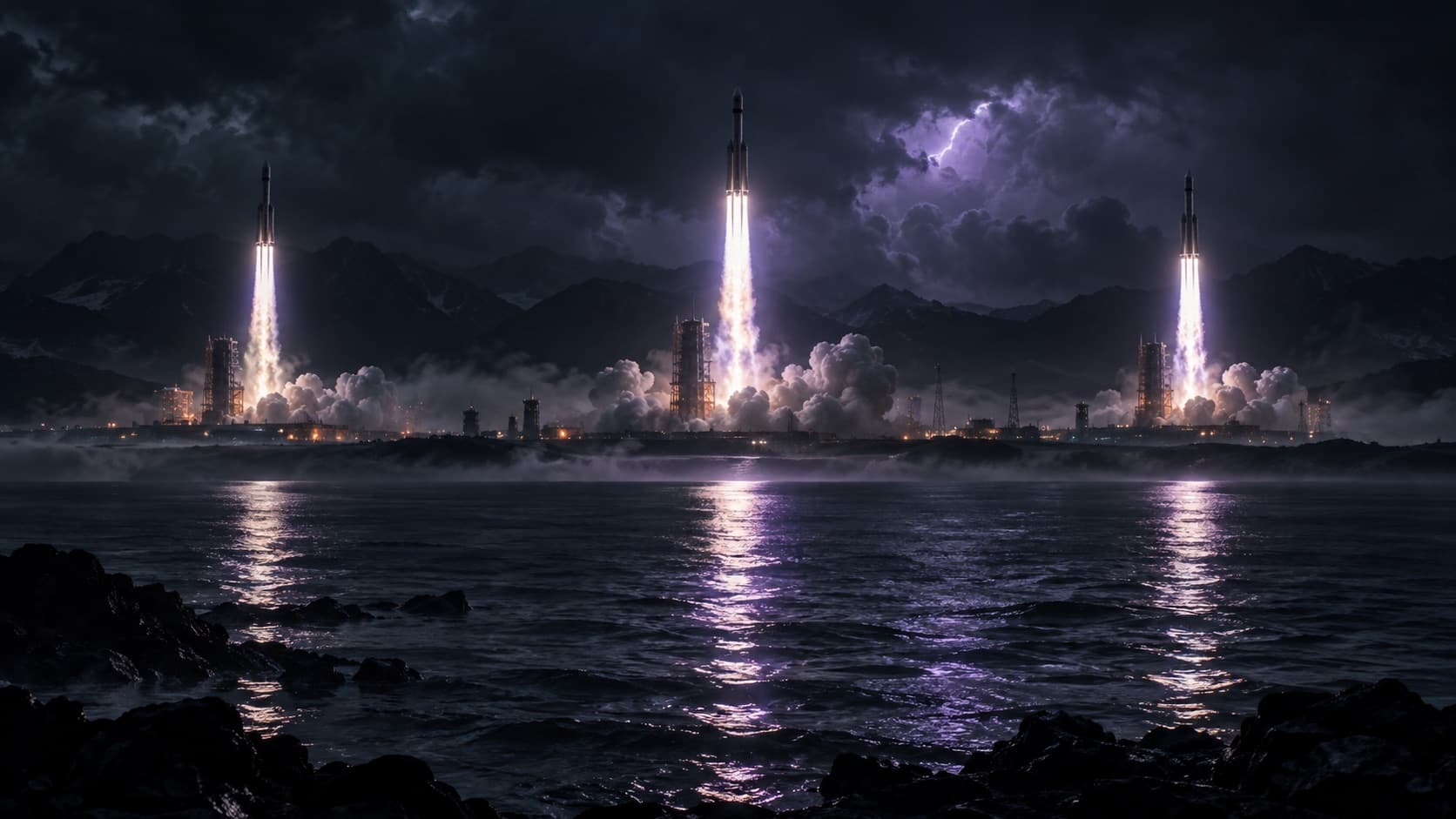 Archive still · 2051 · reconstruction
Kaimana is passing through, not visiting. Planners in the Pacific Concord, the Atlantic Compact and the newly independent Selene Directorate on the Moon run the same numbers and reach the same conclusion: the object will be reachable for about seven years, then gone forever.
No government announces a race. All three run one. Between them they launch nine intercept probes in twenty-six months. Four of them were carrying weapons nobody had declared.
- 11 June 205637I/Kaimana, 2.1 AU from the Sun
Four meters down
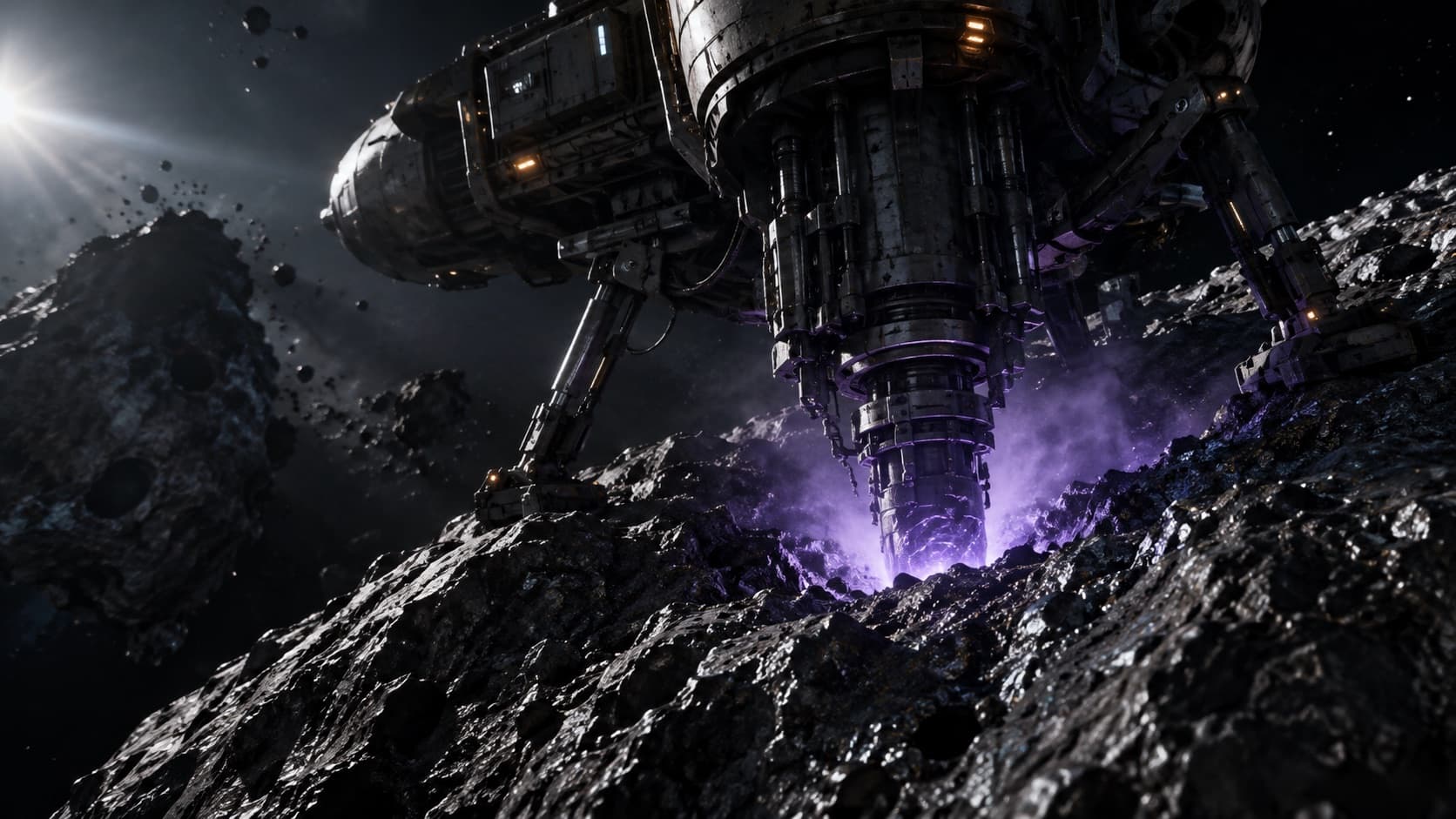 Archive still · 2056 · reconstruction
The Concord probe Tern anchors to the object and drills. At four meters the drill head begins to glow violet and the telemetry shows a magnetic field locked rigidly into the core sample. Tern returns 3.1 grams of material to lunar orbit eleven months later.
Mass spectrometry identifies element 126, mass 310. The lab report's first citation is a 2026 web page, archived by a crawler, with the slider set to +24 MeV.
- 2057Everywhere
The paper
§2 explains why that mattered →A four-page letter confirms what the probe hinted at: Neodanium superconducts up to 371 kelvin at ordinary pressure. Within a year every major navy has rewritten its doctrine around four words in the abstract: “no cryogenic support required.”
Room-temperature magnets mean shields on every hull, rails that don't wear out, and fusion drives that fit inside a ship. They also mean whoever holds the rock decides who gets any of it.
- 2 September 2058High Earth orbit
First shot
An Atlantic relay satellite shepherding the second intercept wave is destroyed by a kinetic interceptor of unknown origin. Nobody is aboard. Nobody claims it. Each bloc produces tracking data proving it was one of the other two.
Declassified telemetry from 2141 shows the interceptor was a Concord unit whose targeting software had confused the relay with a Selene probe. The error was known within an hour.
- 2059 to 2062The inner solar system
The Perihelion War
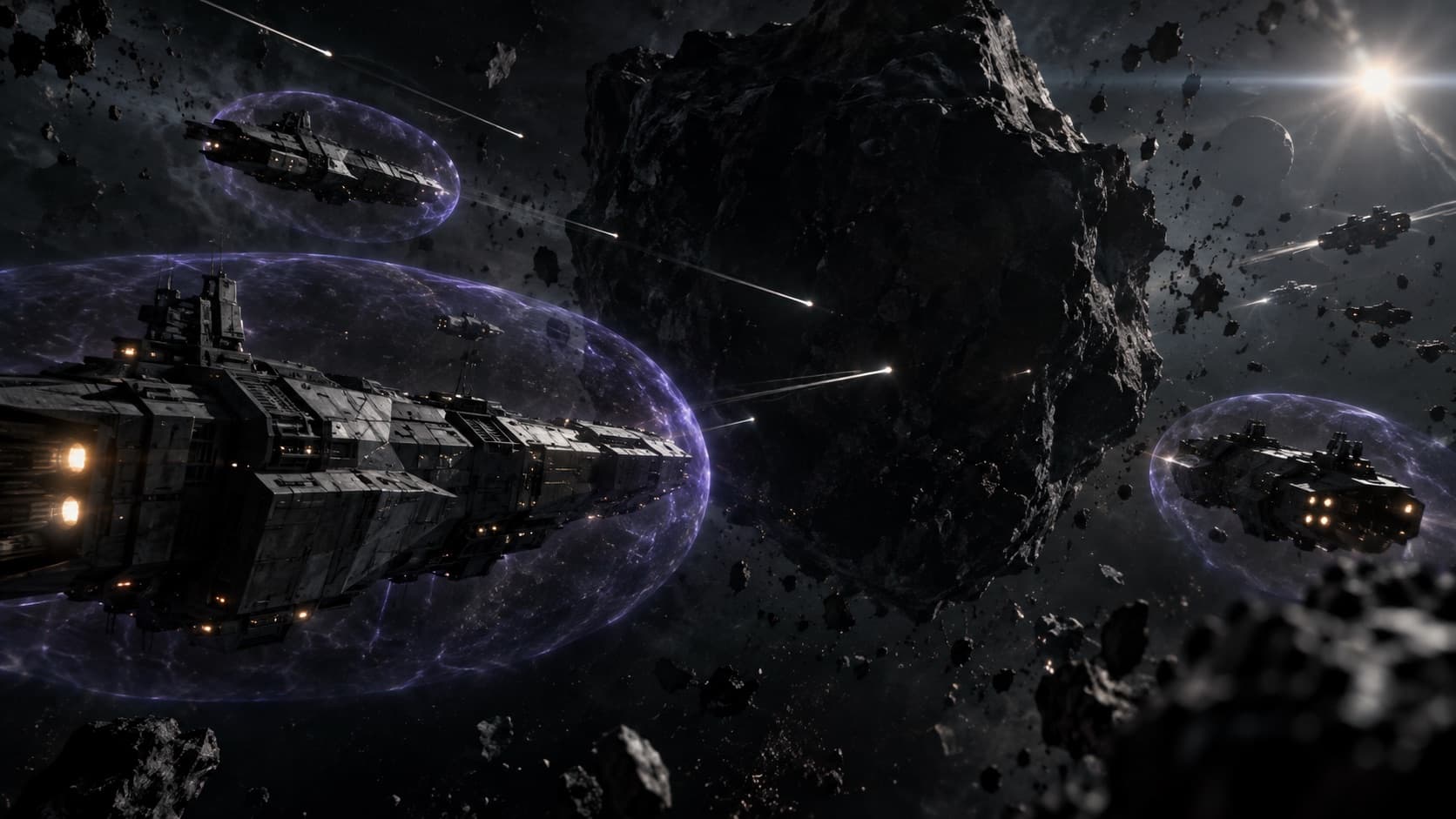 Archive still · 2062 · reconstruction§4 is how the shields worked →
For three years, the fighting follows Kaimana as it swings around the Sun. It is the first war fought with magnetic shields, Neodanium rails and constant-thrust fusion drives, and the first in which most casualties come from radiation and accidents rather than enemy fire.
Forty-one ships are lost. 2,316 people die, including the entire crew of the Compact cruiser Ostrava, whose shield coil was wound from counterfeit Dn alloy sold by their own procurement office.
- 2061Mare Imbrium, the Moon
The standoff
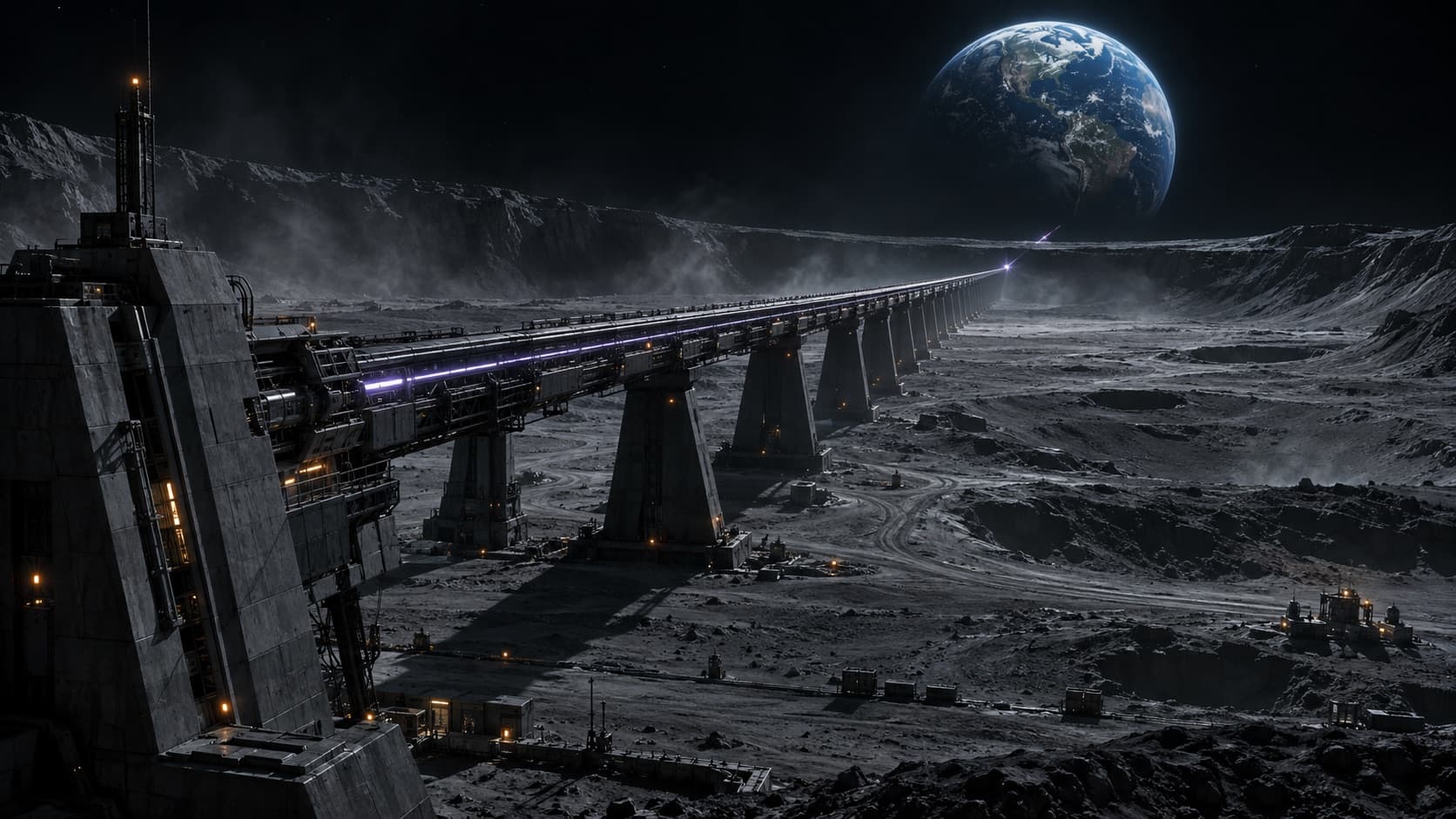 Archive still · 2061 · reconstruction§3 does the arithmetic →
The Selene Directorate completes a forty-kilometer mass driver and points it at Earth. It never fires a weapon. It doesn't need to. Every Earth government can work out what a one-tonne rock arriving at eleven kilometers a second does to a city.
For nineteen days the war stops while everyone does the arithmetic. Selene's own engineers had secretly disabled the targeting system on day two. They told no one, on either side, for thirty years.
- Autumn 2062Aboard the salvage tug Kestrel
The capture
By late 2062 the problem is no longer who owns Kaimana. It is that Kaimana is leaving, and no bloc has enough working ships left to stop it alone.
Crews from all three blocs, some of whom had been shooting at each other weeks earlier, work rotating shifts on a single salvage tug. They brake the object using a tether woven from its own Neodanium, dragging against the solar wind like a sea anchor. Kaimana settles into a stable orbit at 1.9 AU. The tug's log for the final burn has three signatures, one from each bloc, in three different colors of ink.
- 9 February 2063Shackleton Crater, the Moon
The Lattice Accords
 Archive still · 2063 · reconstruction
The war ends with a treaty that gives everybody less than they wanted. Its core is short enough to quote.
Art. I. The body designated 37I/Kaimana and all Neodanium derived from it are the common heritage of humankind and the property of no state.
Art. IV. Every gram shall be entered on a public ledger, open to any person, at all times.
Art. VII. The physics shall not be secret. All technical knowledge concerning Neodanium shall be released to the public no later than one hundred and twenty-six years from signature.
Article VII was added at 4 a.m. on the last night by a translator who was not supposed to be drafting anything.
- 18 May 2071Earth to Mars
The first crossing
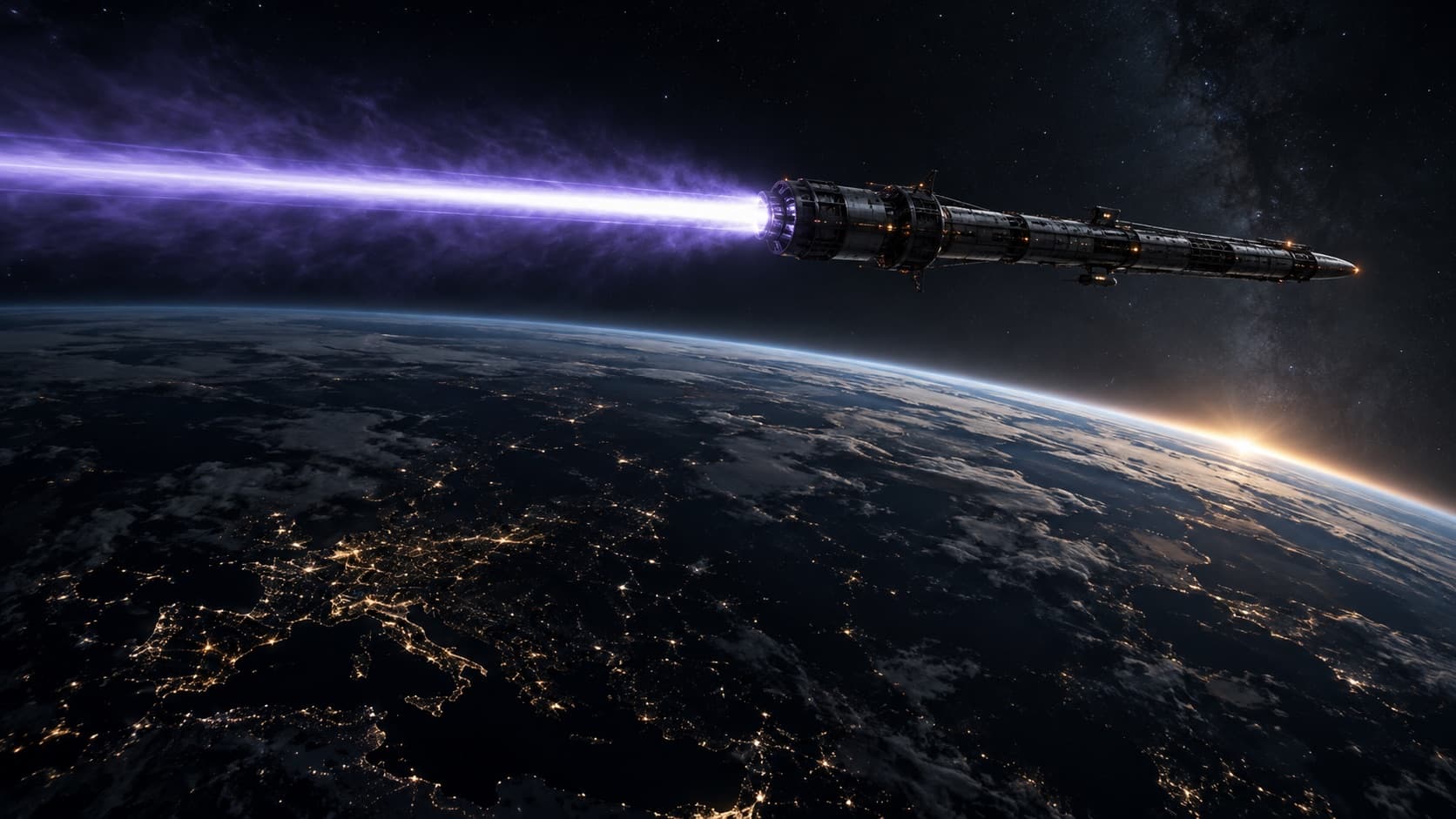 Archive still · 2071 · reconstruction§5 runs the numbers →
The Harmonia, the first civilian torch ship, crosses from Earth orbit to Mars at 0.3 g in three days and twenty hours. Her navigator, Lt. R. Ilunga, had spent cadet training scribbling in the margins of a field manual that called the trip impossible.
Ilunga's first message from Mars was four words long. “Tell grandma. Four days.”
- 9 February 2189The public record
This document
One hundred and twenty-six years after signature, under Article VII, Field Manual 126-310 is released to the public in full, margin notes included.
The Ledger currently lists 41.7 tonnes of Neodanium, in 2.2 million entries. One gram is unaccounted for. It has been unaccounted for since 2063, and every auditor since has left a note in the file.
The Accords name one civilian in their annexes. The personnel file is open.